
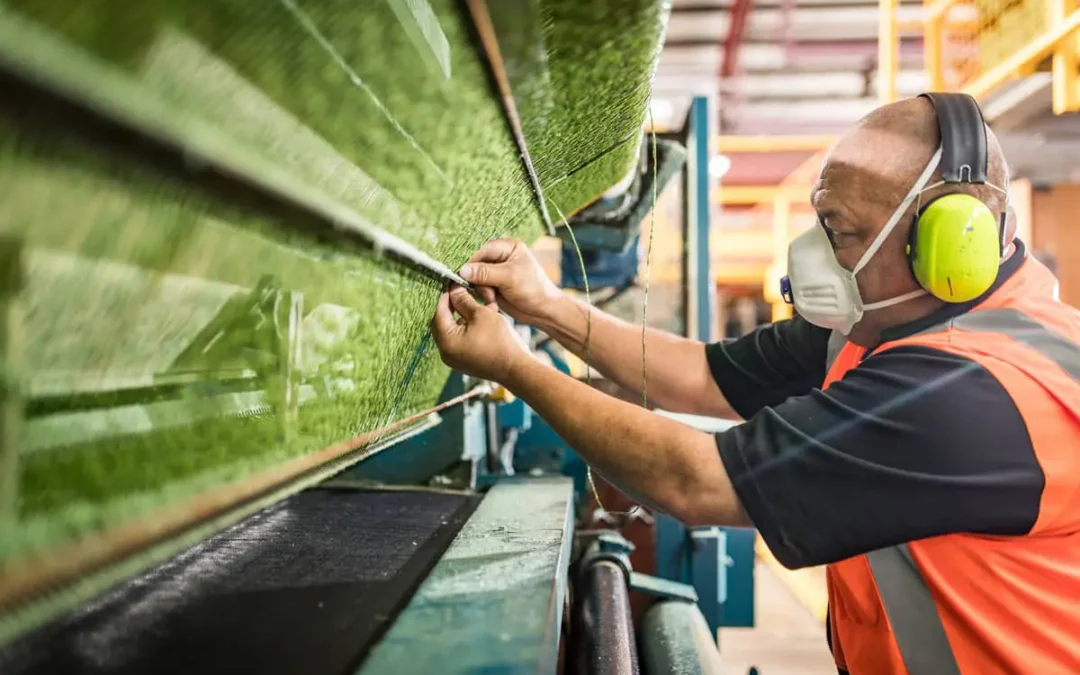
Artificial turf provides us with idealistic yards, perfect play areas, and enhanced green spaces, but have you ever wondered what synthetic grass actually is? Or how it’s made to look so natural?
The fact is that synthetic grass technology has changed a lot over the years. Gone are the days of dull, matted turf grass loaded with harmful chemicals — now, high-quality, modern turf grass is environmentally-friendly, non-toxic, and designed to deliver your dream yard year round.
In this article we’re going to cover what artificial turf is made of, how it’s made, and how to choose artificial turf that’s specific to your needs.
Key Points About How Artificial Turf is Made
- Artificial turf is typically made from polyethylene, polypropylene, or nylon, all used because of their natural-looking appearance and durability.
- Synthetic grass is made with a series of manufacturing processes that melt the raw, synthetic material and then stretch, form, sew, and attach the individual artificial blades to a sturdy backing.
- Professionally-installed, high-quality turf can last anywhere from 15-20 years for residential properties, while budget turf with DIY installation may need to be replaced in as little as 4-7 years.
- Modern Grounds is a leading provider for professional turf installation, and is backed by a Certified Synthetic Turf Installer (CSTI), ensuring long-lasting landscaping design that looks real while staying beautifully green and clean-cut.
What is Artificial Grass Made Of?
Modern turf is usually made of materials like polyethylene, polypropylene, or nylon that mimic grass blades, and is held together with backing material that keeps the individual fibers together to provide structural stability.
The most common turf materials include:
Polyethylene
Polyethylene is the most popular, realistic, and softest choice for residential lawns with moderate traffic from families, kids, and pets.
This material is durable, non-porous (easy to clean), and very soft to the touch. The texture does require occasional brushing or raking to help it maintain its appearance. Learn: How to Take Care of Artificial Turf: Cleaning & Maintenance Tips
All of the premium-grade turf at Modern Grounds is made with UV-resistant polyethylene that is resistant to fading, matting, and deterioration from extreme temperatures and the sun’s rays.
Polypropylene
Turf grass made with polypropylene is the cheapest and least durable option. While it is inexpensive and lightweight, it has the lowest melting point which means it is prone to damage in high heat. Learn: Does Artificial Turf Get Hot in Summer? (And How to Reduce Heat)
Polypropylene is moderately soft, but not designed to withstand regular use and foot traffic. This type of synthetic grass is really only ideal for indoor, low-traffic, or decorative areas.
Nylon
Typically, nylon is used for artificial turf in high-traffic areas and sports fields that need to withstand constant use and abuse.
How is Synthetic Turf Made?
1. Raw Material Selection & Extrusion
Afterwards, this mixture is extruded (forced through a perforated plate) to create the long, continuous shapes that resemble natural blades of grass.
2. Artificial Grass Fiber Creation
Once the turf fibers have been stretched into these “yarns”, they are wound onto spools.
3. Tufting the Turf Grass
Artificial turf with shorter pile height is popular for putting greens, while longer pile height is often preferred for lawns.
4. Backing & Coating Synthetic Grass
5. Turf Finishing
Proper drainage is critical for synthetic grass, and this step ensures its longevity.
6. Adding Infill to Artificial Turf
Synthetic Grass: Professional Grade vs. Budget Grade
Professional-Grade Turf
Professional-grade turf is engineered with advanced backings, UV protection, proper infill compatibility, and realistic blade structure. It resists fading, matting, and deterioration from harsh sun and heavy rains. Premium turf from Modern Grounds even comes with a full 15-year warranty.
High-quality, professionally-installed synthetic grass can last anywhere from 15-20 years for residential properties.
When choosing artificial turf for your property, we recommend choosing turf that is made in the United States or Europe — not only because of the higher quality, but because they are subject to stricter regulations that ensure the turf is lead-free and does not include harmful chemicals.
Related: How Long Does Artificial Turf Last?
Budget-Grade Turf
Budget turf grass has a lower face weight, resulting in fewer, thinner blades that flatten and wear down quickly, especially with heavy use. The appearance is also generally unnatural and fake, with a uniform, bright green color, excessive shine, and no blade variations. Budget turf grass options generally only offer a limited or restrictive warranty.
If you choose budget turf, DIY installation, or don’t take care of your artificial turf, you could find yourself needing to replace it in as little as 4-7 years.
Most budget turf is also not manufactured with proper drainage, is not eco-friendly, and when produced overseas, may suffer from quality defects like inconsistent blade length, color, and more.
Choosing Artificial Turf Specific to Your Needs
Experienced turf installers will be able to help you choose the right turf option for your needs.
Here’s a quick guide for selecting turf materials based on intended usage:
- Residential Landscaping & Backyards: Landscaping turf usually requires polyethylene turf with a medium to high pile height for softness and realism.
- Pet Areas: Pet turf is usually designed with polyethylene with antimicrobial backing and strong drainage.
- Putting Greens: Putting greens benefit from short-pile height turf made of polyethylene for a smooth, fast surface.
- Playgrounds & Schools: Polyethylene turf with strong backing and padding for impact protection.
- Commercial Applications: Commercial turf often requires nylon or polyethylene that is designed to handle high-traffic.
Why Modern Grounds is the Best Choice for Artificial Turf Installation
Modern Grounds’ professional turf installations include skilled labor and craftsmanship, proper insurance, advanced equipment, and warranties, ensuring that your synthetic grass can last for decades.
When you trust Modern Grounds to install your synthetic turf you’ll receive the following benefits:
- Proper Drainage: Excavation and grading to ensure proper drainage.
- Sturdy Foundation: Base installation using crushed stone, compacted in multiple layers.
- Growth Prevention: Weed barriers to stop growth from underneath.
- Precision Edging: Works to lock the system in place.
- Seamless Appearance: Cutting and seaming turf so the lines disappear.
- Wrinkle Prevention: Stretching material properly to prevent wrinkles.
- Structural Integrity: Applying adhesives and seam tape for structural strength.
- Increased Longevity: Ensuring infill installation to proper levels to help turf look great and stand the test of time.
Learn: Why High-Quality Turf Installation is Worth the Investment
Precision in Every Fiber: How Artificial Turf Is Made to Last
Understanding what artificial turf is and how it’s made can help you recognize the value of professional-grade turf and installation.
Trusting experts to help you choose the right synthetic grass for your needs, opting for US-made turf that is eco-friendly and backed by a lifetime warranty, and ensuring maximum longevity with proper installation, means you can bring your dream lawn to life — and rest easy knowing it will last long term.
Don’t wait: Contact Modern Grounds for a free quote today!