
Every year homeowners have to combat hot weather and soaring temperatures when they’re trying to enjoy their backyards. So, what about artificial turf? Does it get too hot in the sun and in high temperatures?
While artificial turf does heat up, much like any surface that is in direct sunlight, the good news is that keeping synthetic grass cool and comfortable for your whole family is very easy. In this article we’re going to discuss how heat affects artificial turf, how to keep turf grass cool, and why synthetic grass is a safe and aesthetic option compared to regular grass.
Key Points About Artificial Turf & High Temperatures
- Artificial turf gets hotter in the sun compared to natural grass because the turf fibers and infill materials absorb more heat.
- High-quality artificial turf that is professionally installed includes UV-resistant turf fibers and reflective infill materials that help reflect heat rather than retain it, keeping it cooler than budget turf.
- Turf grass in shaded areas will naturally stay cooler. Smart landscaping that integrates umbrellas, pavers, palms, pergolas, or bushes can provide much-needed relief from the sun.
- Spraying down synthetic grass with water during peak heat can drop the surface temperature by 30-50°F degrees almost instantly. While it won’t stay cool all day, it’s an easy hack for comfort when you, your kids, and pets need it most.
Why Does Artificial Turf Get Hot?
Artificial turf is typically made of plastic fibers (polyethylene or polypropylene) that sits on top of an underlying base of infill materials.
Synthetic grass gets hot in the sun because of the following factors:
- Plastic & Rubber Retain Heat: Real grass cools itself through evapotranspiration, allowing it to release moisture into the air. Artificial grass doesn’t benefit from this natural cooling process, so the heat it absorbs has nowhere to go but into the surface itself.
- Dark Colors Absorb Heat: Most turf fibers and infill materials are darker shades of green, brown, or black. Dark surfaces absorb more sunlight which heats the surface significantly.
- Infill Materials Add Heat: Low quality artificial turf can sometimes rely on rubber crumb infill. This type of infill also absorbs and holds heat, which increases surface temperatures significantly.
The turf fibers and infill materials you choose can significantly impact the surface temperatures of artificial turf. In fact, choosing cheap infill materials like black rubber, can cause your artificial turf to be significantly hotter than premium infill materials like silica sand.
How Hot Does Turf Grass Get?
There is a lot of mixed information about how hot artificial grass gets online. Everything ranging from it being the same temperature as regular grass, to it being hotter than any other surface when exposed to direct sunlight.
The fact is that when synthetic turf grass is in direct sunlight it can get anywhere from 30-60 degrees hotter than natural grass in the same conditions. However, it is important to note that almost all surfaces, other than natural grass, reach these high temperatures when exposed to heat and sunlight.
For reference, one study revealed the following max surface temperatures in extremely hot and sunny conditions (120°F):
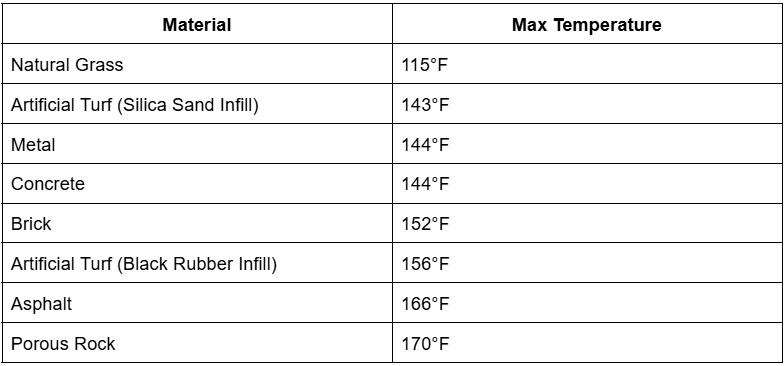
According to another study by Penn State, research further demonstrates that different infill materials and synthetic fibers can change the max temperature of synthetic turf in high heat by over 20°F.
Bottom Line: Opting for professional installation and choosing the right synthetic turf system (fiber and infill materials) can significantly affect how hot your turf can get.
Does Synthetic Grass Always Get Hot?
The simple answer to this question is: not always.
The temperature of artificial turf can be impacted by a variety of factors. For example, synthetic grass will be its hottest when in full sun, or when exposed to sun being reflected by windows or dark hardscapes.
Alternatively, turf grass in shaded areas is typically 20-40°F cooler, which is much more tolerable to bare feet and paws.
When installing artificial turf, it is important to pair your new turf grass with smart landscaping, including plenty of shade to provide relief when temperatures are at their peak.
How to Keep Artificial Turf Cool
1. Water Artificial Turf Before Use
One study revealed that when watered, the temperature of synthetic turf can be lowered by anywhere from 30°F after 5 minutes, to a staggering 89°F if watered for 30 minutes.
Watering artificial turf works especially well before kids play or pets go out.
Learn More: Is Artificial Turf Safe for Kids & Pets?
2. Install Shade Structures to Support Turf Grass
3. Plant Trees or Tall Plants Nearby Turf Grass
Trees and plants are a natural way to keep artificial turf cooler.
When you incorporate natural plants in your landscaping you:
- Help block direct sunlight during peak heat hours.
- Create a cooler microclimate.
- Add beauty and diversity to your yard.
4. Opt for Cooling Artificial Infill Materials
As we’ve learned, the infill materials you use for your artificial turf make a significant impact on its surface temperature.
Make sure to choose sun-smart infill materials like silica sand, that naturally reflect heat to help keep turf up to 20 degrees cooler than low quality options.
5. Prioritize High-Quality Synthetic Turf & Professional Installation
High-quality synthetic grass offers increased durability, realistic appearance, UV protection, softer and cooler feel, improved drainage, and can withstand the use and abuse from higher-traffic residential lawns, play areas, and sports fields.
When you opt for professional installation, you’re choosing safer, cooler, and more aesthetically-pleasing artificial turf long term.
Learn More: Why High-Quality Artificial Turf Installation is Worth the Investment
Safety Tips for Hot Turf Grass
As with any outdoor venture, you always want to keep your loved ones safe.
Tips for staying safe on artificial turf during peak times:
- Check surface temperatures before letting kids or pets out.
- If it’s too hot for your hand, it’s too hot for bare feet and paws.
- Provide shaded spots for outdoor activities.
- Schedule playtime in the morning or evening.
- Wear outdoor shoes or sandals when turf is hot.
- Cool turf grass with water breaks when needed.
When enjoying your artificial turf, always practice smart sun-safety habits like wearing sunscreen, sunglasses, and protective clothing to guard against harmful UV rays.
Is Artificial Turf Right For You?
Now that we understand how to beat the heat, you might still be wondering if synthetic turf is better than artificial grass, and if it’s a good fit for you and your family?
The short answer is, yes. Professionally installed, high-quality turf has numerous benefits compared to natural grass.
Benefits that artificial turf offers compared to natural grass:
- Low Maintenance: Turf requires very little maintenance and upkeep, and will look brand new for years to come.
- Improved Safety: High-quality synthetic turf requires no chemicals or pesticides, and is 100% non-toxic and safe for kids, pets, and loved ones.
- Cost-Effectiveness: Maintaining natural landscaping is extremely expensive, the best artificial turf reduces landscaping maintenance costs by $1000-$2400 per year in Florida.
- Luxury Aesthetics: Premium synthetic turf is specifically designed with multiple colors and realistic blade designs that provide you with a gorgeous and consistent yard year-round — turf grass can even increase your home value.
- Drought & Flood Resistance: Enjoy a perfect yard regardless of droughts or major flooding events.
- Environmental Benefits: Artificial lawns do not require hydration, meaning you can conserve thousands of gallons of water per year.
Turn Down the Heat: Making Artificial Turf Summer-Ready
Yes, artificial turf will heat up in direct sunlight, but with professional installation and high-quality turf and infill materials, you can reduce surface temperatures significantly (20 degrees, or more). By implementing our simple and easy expert tips, you can enjoy a beautiful, pet- and kid-friendly artificial lawn that is comfortable, safe, and inviting — even in Summer.
Modern Grounds specializes in premium synthetic turf installations across Florida. Our mission is simple: to help everyone in Florida fall in love with their lawns again. What are you waiting for? Contact us today to schedule a free quote.